Find pet insurance in your state
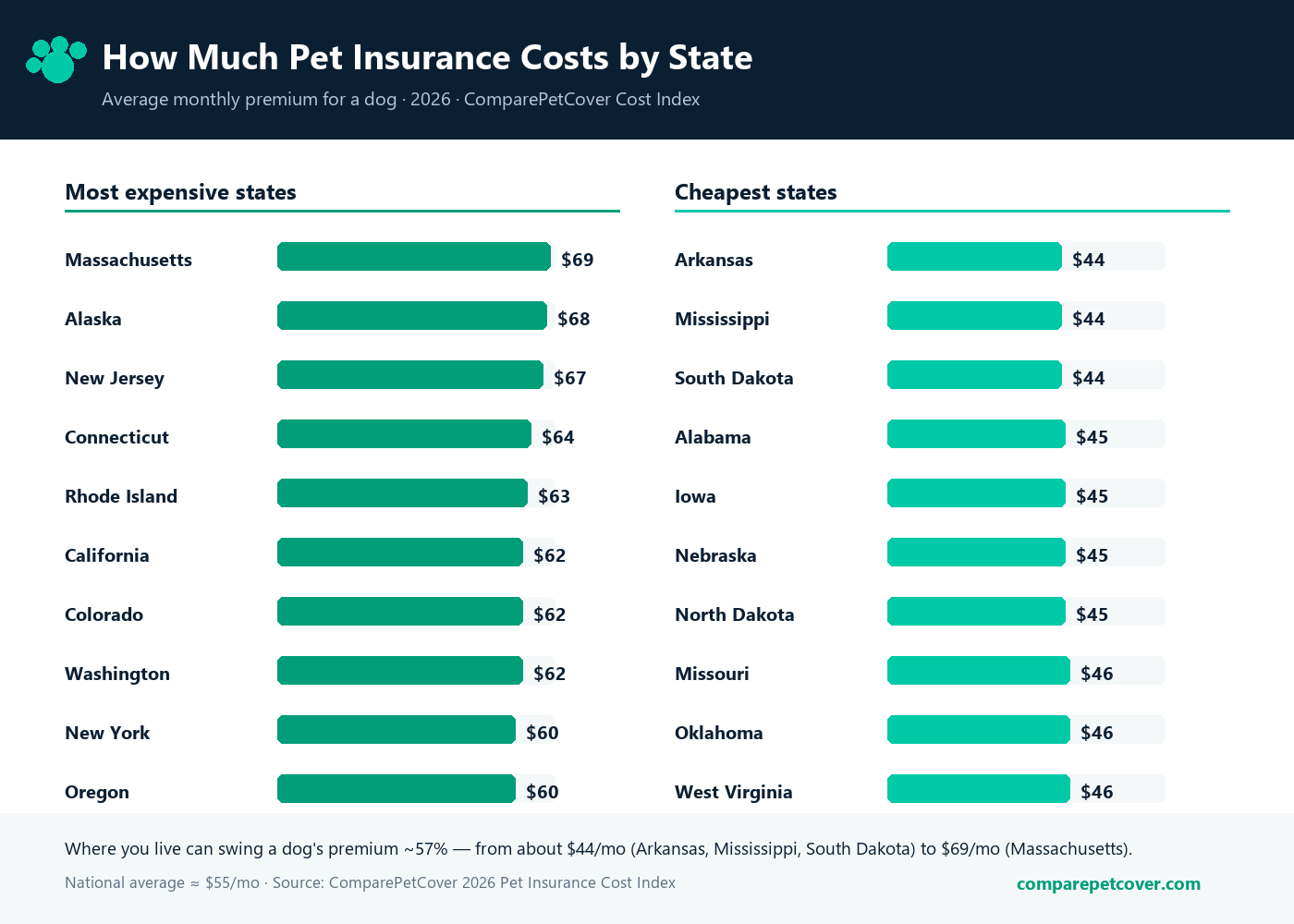
Vet prices — and premiums — vary by 2–3× depending on where you live. Pick your state for local costs and the top-rated providers near you:
Pet insurance by city
Premiums move inside a state as much as between states. These metro guides give the local number rather than the state average:
How it works
Pick your state
See average monthly costs for dogs and cats where you live.
Compare top plans
Weigh coverage, reimbursement rate, and annual limits side by side.
Get your quote
Choose the plan that fits your pet and budget — and protect them today.
Best pet insurance companies in the USA (2026)
We independently reviewed the leading US insurers on coverage, reimbursement, waiting periods, exclusions and value. Here’s how they rank — tap any provider for the full review:
| Provider | Our rating | Best for |
|---|---|---|
| Embrace | 4.3 ★★★★☆ | Long-term holders & dental cover |
| Spot | 4.3 ★★★★☆ | Customizable plans, no age limit |
| Trupanion | 4.2 ★★★★☆ | Direct vet pay, no payout caps |
| Lemonade | 4.2 ★★★★☆ | Low starting price, fast app |
| Figo | 4.1 ★★★★☆ | Up to 100% reimbursement |
| Prudent Pet | 4.1 ★★★★☆ | Customizable coverage tiers |
| ManyPets | 4.1 ★★★★☆ | Simple plan, no sub-limits |
| Pumpkin | 4.0 ★★★★☆ | Broad base coverage |
| Fetch | 4.0 ★★★★☆ | Most inclusive base plan |
| Pets Best | 4.0 ★★★★☆ | Budget-friendly, flexible tiers |
| MetLife | 4.0 ★★★★☆ | Multi-pet families |
| ASPCA | 4.0 ★★★★☆ | Inclusive base, older pets |
| Nationwide | 3.9 ★★★☆☆ | Exotic pets (birds, reptiles) |
| AKC | 3.8 ★★★☆☆ | Older pets & cured pre-existing |
| Healthy Paws | 3.7 ★★★☆☆ | Unlimited coverage, fast payouts |
Ratings are ComparePetCover’s independent editorial assessment. Premiums and terms vary by pet, breed, age and state — always confirm current details with the provider.
How much does pet insurance cost in 2026?
As a national benchmark for accident-and-illness coverage: dogs ≈ $35–$70/mo and cats ≈ $15–$35/mo. Larger breeds, older pets, and high-cost states push premiums higher. Is it worth it? →
| Plan type | Covers | Best for |
|---|---|---|
| Accident-only | Injuries | Budget owners, young pets |
| Accident & illness | Injuries + illnesses | Most owners (standard) |
| Wellness add-on | Routine care, vaccines, cleanings | Predictable yearly costs |
What pet insurance covers — and what it doesn't
Most owners buy an accident-and-illness policy, the standard plan that covers unexpected injuries and illnesses. A comprehensive plan typically pays toward diagnostics (bloodwork, X-rays, MRIs), surgery and hospitalization, prescription medications, cancer treatment, emergency and specialist care, and dental illness. Better plans also cover hereditary and congenital conditions (such as hip dysplasia or heart defects common in certain breeds) and chronic conditions like diabetes or allergies that need lifelong management.
Just as important is what pet insurance does not cover. The universal exclusion is pre-existing conditions — anything your pet showed signs of before coverage started or during the waiting period. Other common exclusions are cosmetic or elective procedures, breeding costs, and routine/preventive care (vaccines, wellness exams, flea and tick prevention), which is only covered if you add a wellness add-on. This is why enrolling while your pet is young and healthy matters so much: it keeps more conditions eligible for coverage.
Key pet insurance terms explained
Deductible
What you pay before reimbursement begins. Most US plans use an annual deductible (once per year); some use a per-condition deductible. A higher deductible lowers your monthly premium.
Reimbursement rate
The percentage of the vet bill the insurer pays back after the deductible — usually 70%, 80%, or 90%. A higher rate means more back on claims but a higher premium.
Annual limit
The maximum the policy pays out per year. Options range from a few thousand dollars to unlimited. For expensive states or breeds, a high or unlimited limit is safer.
Waiting period
The delay between buying a policy and when coverage starts (often a few days for accidents, ~14 days for illnesses). Conditions that appear during this window count as pre-existing.
There are usually no vet networks and no co-pays beyond your chosen deductible and reimbursement split — you can visit any licensed veterinarian, including emergency and specialty hospitals, and file a claim afterward.
How to choose the best pet insurance for your pet
- Match the plan to your pet. A young mixed-breed cat and a senior large-breed dog need very different coverage. Factor in breed-specific hereditary risks.
- Compare at least three quotes. Premiums for identical coverage can differ 30–50% between insurers. See our provider comparison.
- Read the exclusions and waiting periods, not just the price — a cheap plan with long waits or many exclusions can cost you when you claim.
- Enroll early. Every year you wait raises the premium and the chance of a pre-existing exclusion. If you need protection fast, see plans with short waiting periods.
How claims and reimbursement work
Pet insurance is a reimbursement model: you pay the vet directly, submit the itemized invoice to your insurer (usually via an app), and get paid back your covered percentage after the deductible. Most claims are processed within days. Because you're reimbursed rather than the insurer paying the clinic, you keep full freedom to choose your veterinarian. For a full walkthrough, see how pet insurance works.
Popular pet insurance guides
Does Pet Insurance Cover Dental Care?
Learn what dental care pet insurance covers in 2026 — dental illness vs. routine cleanings…
Does Pet Insurance Cover Surgery?
Find out which surgeries pet insurance covers in 2026 — from emergency operations to ACL r…
Does Pet Insurance Cover Vaccines?
Does pet insurance cover vaccinations in 2026? Learn how wellness add-ons cover vaccines, …
Does Pet Insurance Cover Cancer?
Does pet insurance cover cancer in 2026? Learn what cancer treatments are covered — chemo,…
Pet Insurance That Starts (Almost) Immediately
Looking for pet insurance with no waiting period? Learn which plans offer near-immediate a…
How Does Pet Insurance Work?
New to pet insurance? Learn how deductibles, reimbursement rates, and annual limits work i…